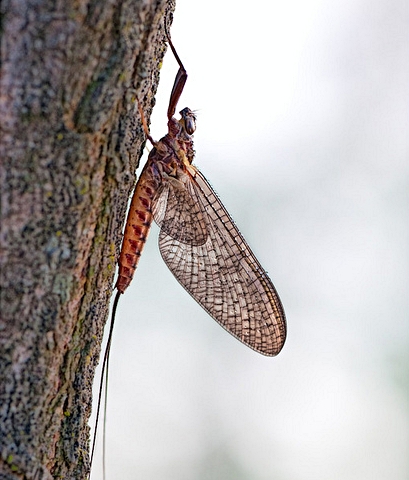
Biological assessment of stream condition rests on a straightforward principle: organisms that have evolved within particular environmental ranges are absent when those ranges are exceeded. For freshwater biologists in Poland, this principle finds its most practical application in the invertebrate fauna of stream beds — animals collectively called benthic macroinvertebrates.
What bioindicators actually measure
Chemical sampling of river water captures conditions at a single moment. Rain events, dry spells, and point-discharge events all shift water chemistry rapidly. An invertebrate community, by contrast, integrates environmental conditions over weeks to months. A taxon that disappears after pollution enters the water does not return until conditions are consistently suitable — and even then, recovery depends on recolonisation from upstream refugia or from connected tributaries.
Poland's inspectorates use this time-averaging property deliberately. Under the State Environmental Monitoring programme coordinated by the Chief Inspectorate of Environmental Protection (GIOŚ), biological quality elements are assessed at intervals of three to six years at most monitoring stations, supplementing more frequent physico-chemical measurements.
The EPT groups and their sensitivity
Three insect orders — Ephemeroptera (mayflies), Plecoptera (stoneflies), and Trichoptera (caddisflies) — carry the bulk of the indicative weight in Polish stream bioassessment. They are collectively abbreviated EPT.
Ephemeroptera — mayfly nymphs
Mayfly nymphs are among the most widespread and diverse invertebrates in Polish streams. Different families occupy different microhabitats: flat-headed heptageniids such as Ecdyonurus and Rhithrogena cling to exposed rock surfaces in fast current; baetids drift freely and tolerate moderate nutrient enrichment; ephemerid burrowers prefer fine sediment in lowland reaches.

The heptageniids are among the most oxygen-demanding invertebrates in stream systems. Their presence in any reach of a Polish upland stream is a reliable sign of good hydromorphological condition combined with low organic loading.
Plecoptera — stonefly nymphs
Stonefly nymphs are largely restricted to mountain and submontane streams in Poland, where water temperatures remain below the thresholds that most lowland-adapted taxa tolerate. The Carpathian basins — including the Dunajec, Raba, San, and Soła drainages — support the richest stonefly assemblages in the country.
Several Plecoptera families are considered strict indicators of oligotrophic conditions. The presence of more than two or three stonefly taxa at a single site in the Małopolska uplands or the Sudeten foothills is interpreted as evidence that the upstream catchment has retained substantial natural riparian cover and has not been subject to intensive tile drainage.

Trichoptera — caddisfly larvae
Caddisfly larvae are ecologically the most diverse EPT order in Polish streams, occupying virtually all stream types from cold headwaters to slow lowland channels. Their case-building behaviour — using sand grains, bark fragments, or leaf litter, depending on species — makes them recognisable in the field even without microscopic examination of mouthparts.
Rhyacophilid larvae, which are free-living predators, occur almost exclusively in fast, well-oxygenated upland reaches. Limnephilid case-builders, by contrast, are tolerant of a wider range of conditions and appear in both clean and moderately impacted streams.

Scoring systems applied in Poland
Raw taxon lists from a kick-net sample are converted into a numerical index before ecological status is assigned. The most widely applied approach in Poland follows the Biological Monitoring Working Party (BMWP) principle: each taxon family is assigned a score between 1 and 10 reflecting its pollution sensitivity, and the scores are summed. High BMWP scores indicate many sensitive taxa; low scores indicate dominance by tolerant families such as Chironomidae (midge larvae) or Oligochaeta (worms).
An average score per taxon (ASPT — Average Score Per Taxon) normalises the BMWP sum by dividing it by the number of scoring families. ASPT is less sensitive to sample size than the total BMWP score and is therefore preferred in comparisons between sites sampled under different conditions.
Limitations and complementary methods
Macroinvertebrate assessment captures one biological quality element. Under WFD, ecological status is determined by the worst-performing quality element: if diatoms or fish assemblages indicate poor status while invertebrates indicate good status, the site is classified as poor overall.
Seasonal timing matters. EPT taxa in Polish mountain streams are most diverse in spring and early autumn; summer sampling in shallow streams may miss taxa that emerge as adults or retreat to deeper pools during low-flow periods. GIOŚ standard operating procedures specify autumn as the primary sampling season for most stream types in Poland.
Human identification of invertebrate taxa remains rate-limiting. Environmental DNA (eDNA) metabarcoding is being evaluated as a complementary approach in several European countries; pilot studies in Polish streams are described in peer-reviewed literature, though no routine regulatory application has yet been adopted.