
The Polish Carpathians form the country's southern rim, with peaks reaching above 2,000 metres in the High Tatras and lower but extensive ranges in the Western Beskids and Bieszczady. Streams draining these mountains have hydrological regimes that differ fundamentally from those of the lowland plains, and their aquatic communities reflect this through pronounced seasonal change.
Hydrology: the seasonal flow template
Carpathian streams follow a bimodal flood regime. The dominant peak occurs in April and May, when snowmelt from higher elevations coincides with spring rainfall. A secondary peak is possible in June and July during convective storms. Between these events, flows drop sharply through August and September. Many smaller headwater streams become intermittent in drought years, with flow restricted to pools connected by seepage through the gravel bed.
Winter conditions vary by altitude. Above approximately 800 metres, streams develop partial ice cover from December through February; at lower elevations, extended freezing is less common but border-ice formation along banks is typical. Full-bank ice freezing, which isolates the water column from atmospheric oxygen exchange, is recorded occasionally but is not the norm in most Carpathian drainages.
Consequences for habitat structure
High spring flows reorganise the streambed. Gravel and cobble move downstream, fine sediment is flushed from interstitial spaces, and organic material accumulated over winter is exported as a pulse. This annual scour is ecologically significant: it maintains the open interstitial habitat that EPT larvae depend on for both oxygenated water flow and refuge from predators.
In reaches where bank modification or levee construction reduces the natural flood pulse, bed material becomes increasingly packed with fine sediment over time. This process — colmation — reduces the hyporheic exchange on which developing invertebrate eggs and early instars depend.
Spring: emergence and recolonisation
April in the Carpathian foothills brings the first mass emergences of early-season Plecoptera. Nemoura and Protonemura adults are visible along stream margins before riparian vegetation has fully leafed out, exploiting the brief window of cool, low-flow conditions that follows snowmelt peak. Their nymphs, which overwinter in the substrate, have accumulated sufficient mass over the preceding autumn feeding period.
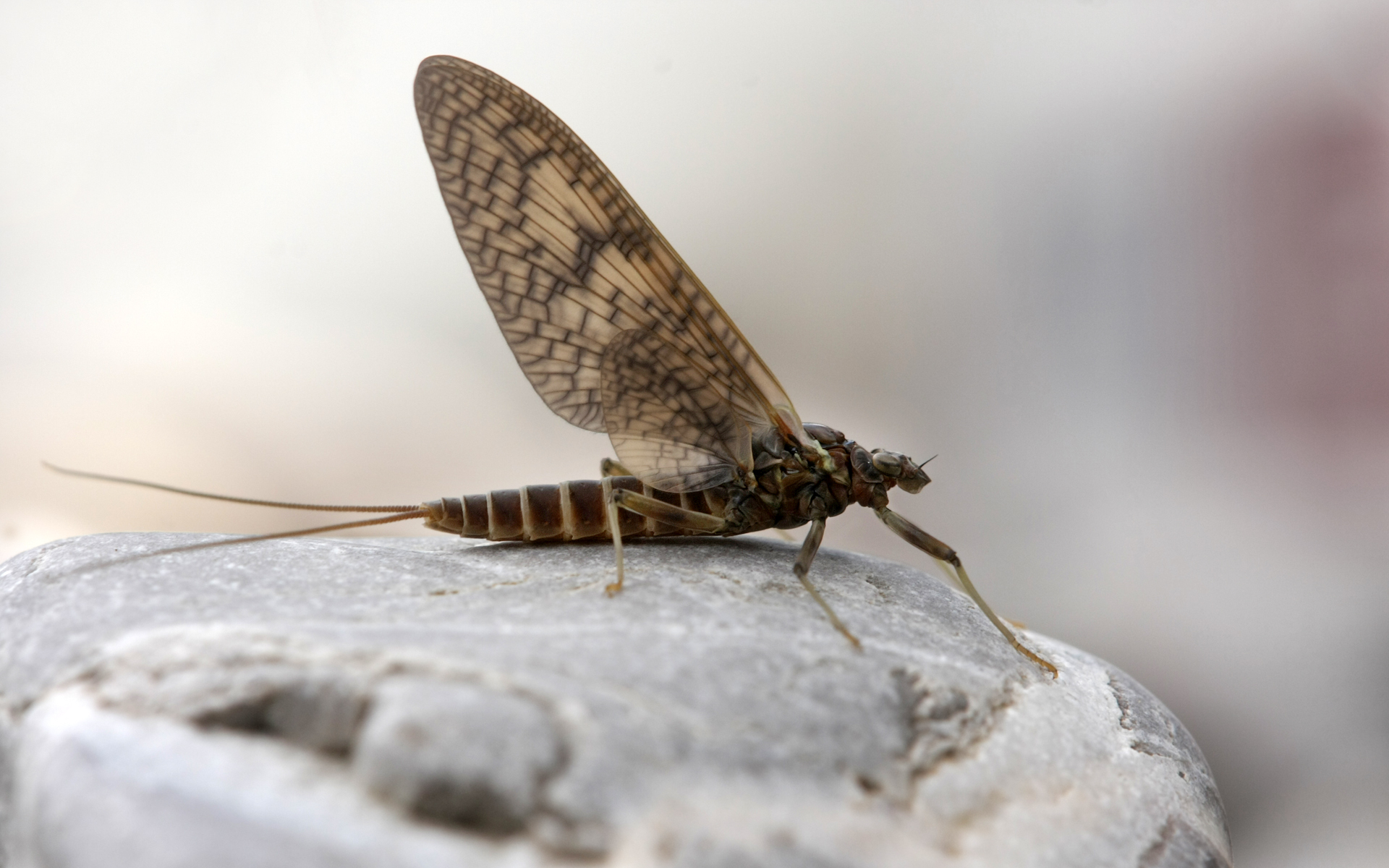
Heptageniid mayfly nymphs are recruiting through spring in most Carpathian streams. Egg masses attached to the undersides of cobbles begin hatching once water temperatures exceed approximately 5°C. Early instar nymphs are highly vulnerable to flood disturbance; catchments where snowmelt is rapid and prolonged generally show lower early-instar survival than those with gradual, controlled melt.
Summer: thermal stratification and low flow
By late July, lowland and foothill streams in the Carpathian region often exceed 20°C during afternoon hours. Even in upland reaches above 500 metres, thermal conditions in August can stress cold-stenothermal taxa. Stonefly nymphs of the more sensitive families (Perlidae, Chloroperlidae) respond by retreating to the deepest available hyporheic zones or migrating laterally to groundwater-fed springs and seeps at the channel margin.
Late summer is also the period when low dissolved oxygen concentrations are most likely in impacted reaches. Warmer water holds less dissolved oxygen; when combined with elevated nutrient loading from agricultural catchments in the lower Carpathian foothills, algal growth can create diel oxygen swings large enough to cause localised nocturnal hypoxia.

Autumn: leaf litter processing and detritivore peaks
The riparian canopy of mixed beech, oak, and alder forest that lines most Carpathian headwaters begins leaf drop in October. This annual delivery of allochthonous organic matter transforms the energy budget of small streams. In shaded forest headwaters, leaf litter is often the dominant energy source for the invertebrate community throughout winter and into spring.
Shredder-functional feeding groups — invertebrates that mechanically fragment conditioned leaves — increase in relative abundance through October and November. Several stonefly families (Nemouridae, Capniidae), along with some caddisfly larvae in the Limnephilidae and Sericostomatidae, are specialist shredders. Their activity processes leaf material into fine particulate organic matter that drifts downstream and feeds filter-feeding caddisflies and simuliid blackfly larvae in larger channels.
Autumn sampling as the standard monitoring window
The concentration of both EPT diversity and shredder activity in autumn is one reason why GIOŚ standard operating procedures designate autumn as the primary monitoring season for most Carpathian stream sites. Samples collected in October or November capture the maximum diversity of stonefly and caddisfly taxa present in the catchment, whereas summer samples underrepresent taxa that have already emerged as adults or are still in early instars too small to be retained in a 500-µm net.
Winter: dormancy and ice effects
Winter in Carpathian streams at mid-elevations is characterised by low but stable discharge, cold water (1–4°C), and reduced biological activity rather than cessation. Most taxa overwinter as eggs or as late-instar nymphs in deep interstitial spaces. Some Plecoptera species complete their growth cycle entirely in winter and are present as large, active nymphs in January and February.
Ice formation at the water surface traps a layer of air between ice and water, reducing the area for gas exchange. In reaches where streamflow is very slow, this can produce localized oxygen deficits that differ markedly from conditions in faster riffles nearby. Invertebrate surveys conducted in winter are rarely used for regulatory assessment but provide valuable information on refuge use and cold-season activity patterns.